
Flora Forge Garden
My Role
Lead Designer
Timeline
January- March 2026
Tools Used
Figma, Procreate, & Adobe Illustrator
Responsibilities
Information Architecture, Social Media Design, Wireframing, Prototyping, & UI
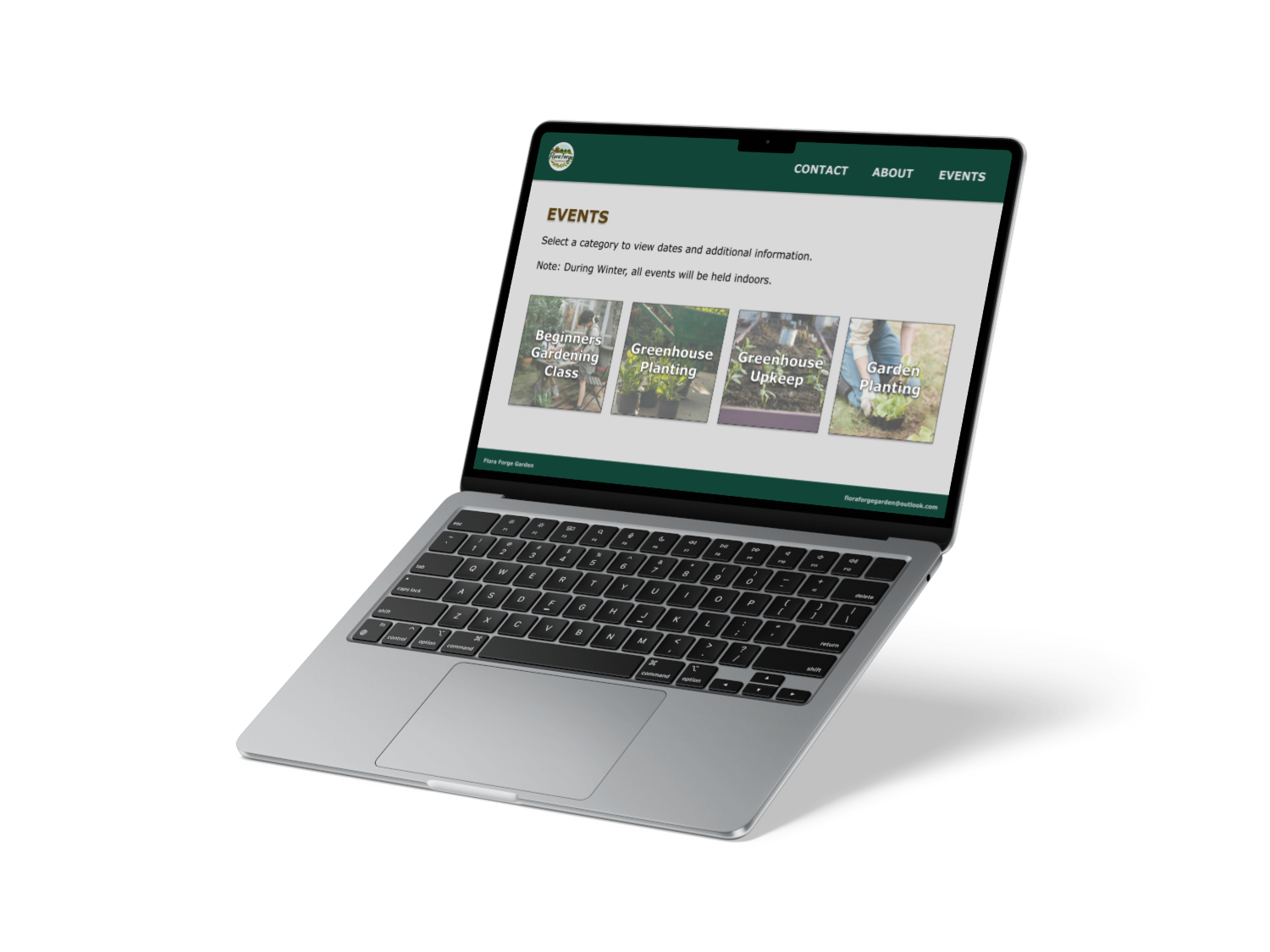
Project Overview
About Flora Forge Garden
Flora Forge Garden is a fictional non-profit organization based in North Carolina that is dedicated to serving its local community through education and engagement in sustainable gardening practices. The organization offers hands-on workshops, volunteer opportunities, and community events designed to empower individuals with the knowledge and skills needed to grow their own food responsibly. By fostering environmental awareness and community collaboration, Flora Forge Garden aims to cultivate long-term, sustainable habits that benefit both people and the planet.
The Problem
As Flora Forge Garden prepares to develop new garden beds on newly acquired land, the organization faces a critical challenge: generating enough volunteer participation to successfully launch the project at the start of the year. Early momentum is essential, as low volunteer turnout could delay progress, reduce community engagement, and impact the overall success of the initiative.
Additionally, the organization lacks a strong digital outreach strategy, making it difficult to effectively reach, engage, and convert potential volunteers within the local community.
The Solution
To address this challenge, a targeted social media campaign was developed to increase awareness, drive website traffic, and encourage user sign-ups. The campaign focused on visually engaging content, clear calls-to-action, and messaging that emphasized community impact and hands-on learning experiences.
Users were directed to a dedicated landing page where they could easily sign up for the Flora Forge Garden email list and upcoming volunteer events. Once subscribed, users entered an automated email nurture flow designed to maintain engagement through personalized content, event reminders, and educational resources related to sustainable gardening.
This strategy not only aimed to boost initial volunteer sign-ups for the garden bed project but also to build a lasting relationship with participants, turning one-time volunteers into long-term community members.
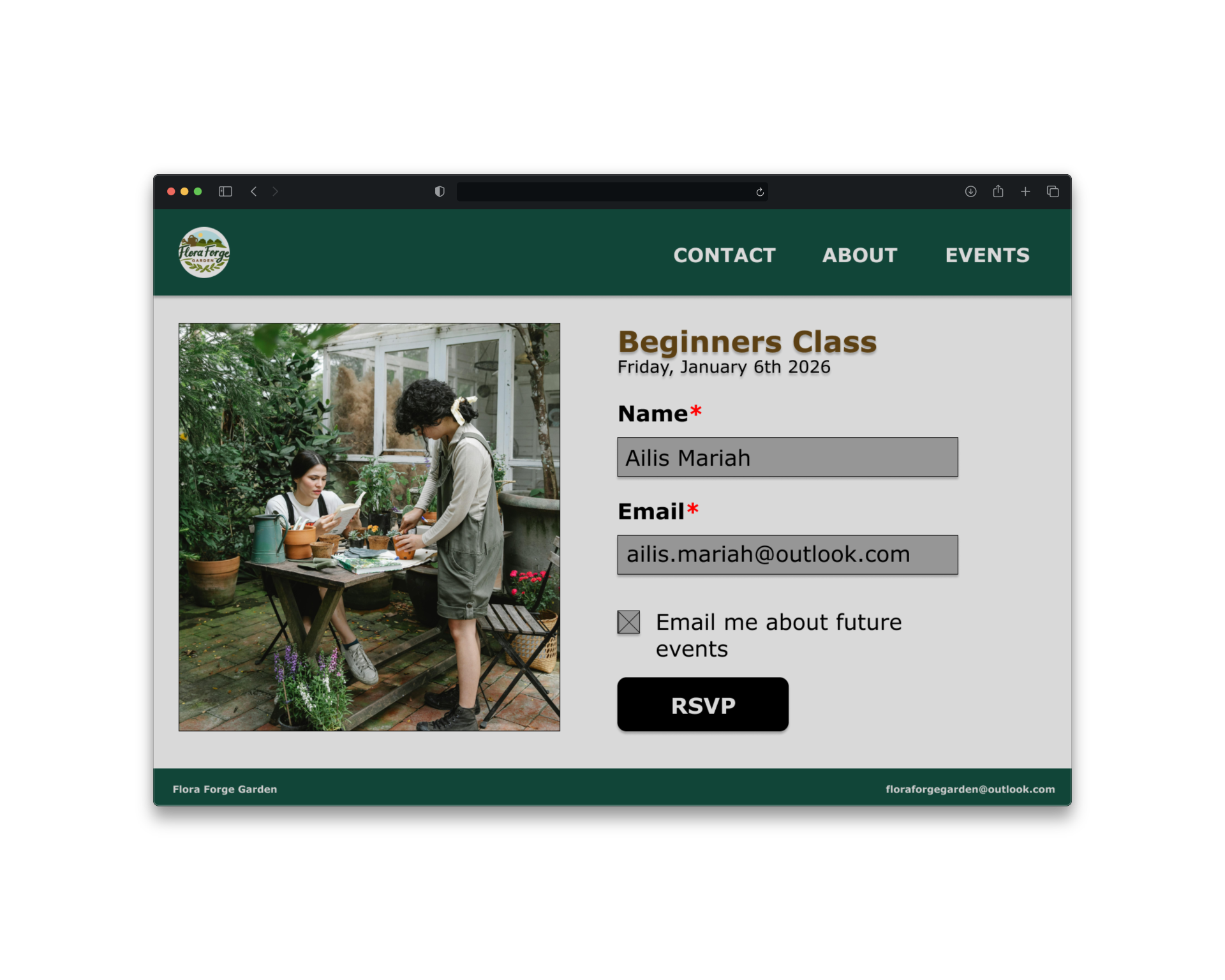
Event Form
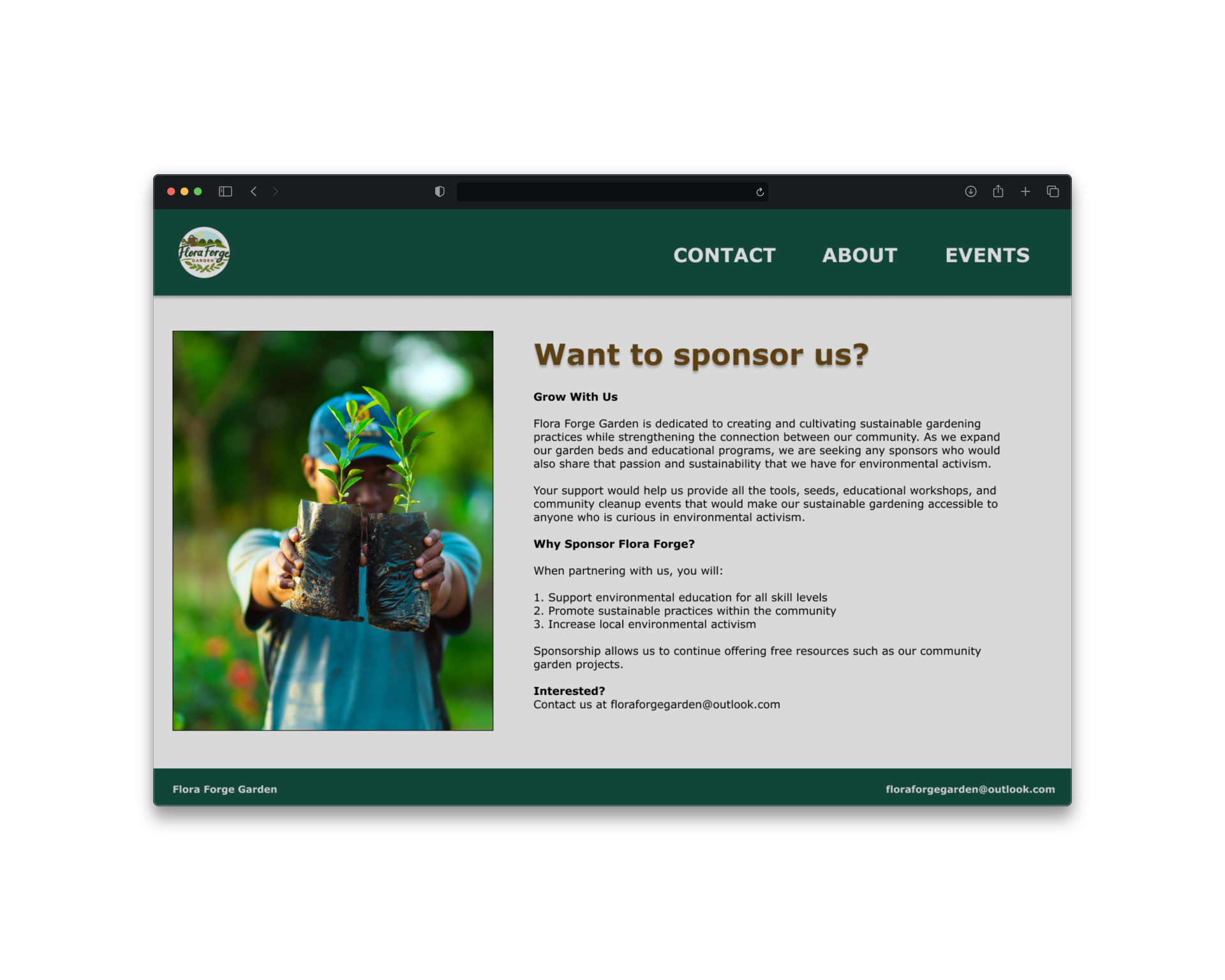
Sponsor Page
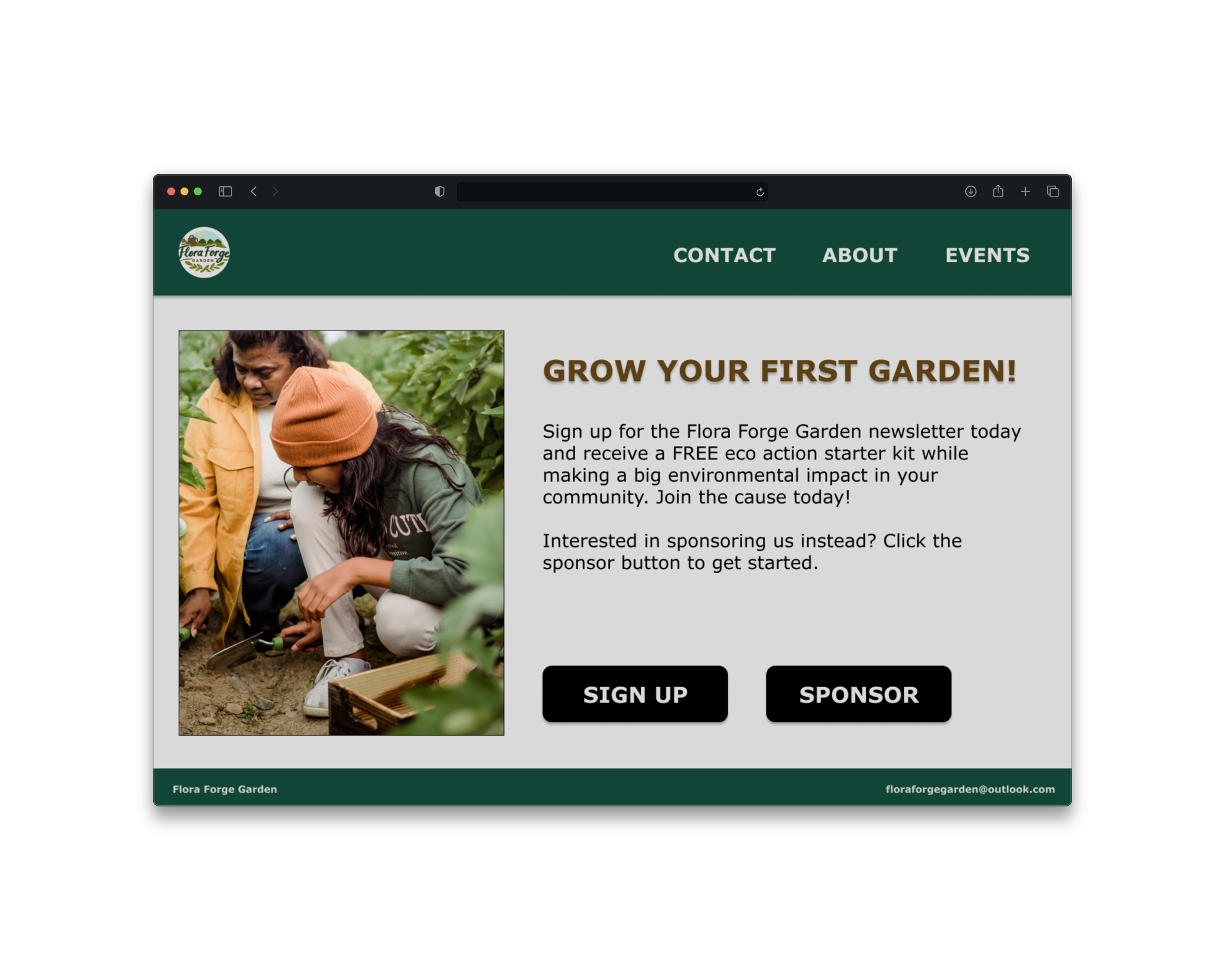
Campaign Landing Page
Research
Target Audience
Senior Citizens | College Students
Our research into the target audience shows that the majority of volunteers are millennials aged 27 to 42. This group tends to be culturally diverse and often from lower income backgrounds. In addition, older generations are also highly involved, with Generation X making up 27.2 percent of volunteers and Baby Boomers accounting for 58.7 percent.
Based on this data, Flora Forge Garden identified key audiences most likely to engage in volunteer work. While the project is open to anyone interested in sustainable gardening, regardless of experience, the target audience was narrowed to college students and senior citizens.
College students are included because they fall near or just below the millennial range and are often actively seeking volunteer opportunities, skill building experiences, and ways to contribute to environmental causes. Senior citizens were chosen to reflect the strong participation of older adults, particularly Baby Boomers, and to ensure inclusivity. Creating a persona for older adults helps raise awareness and engagement within this demographic while aligning with Flora Forge Garden’s values of accessibility and community involvement.
Overall, this approach balances data driven targeting with inclusivity by focusing on groups most likely to volunteer while still welcoming a broad range of participants interested in sustainable gardening.
Social Media Campaign
The social media campaign for Flora Forge Garden aimed to communicate the organization’s mission while encouraging users to visit the website and sign up for volunteer opportunities. Messaging focused on education, community impact, and personal fulfillment, highlighting the value of sustainable gardening for both individuals and the community.
The campaign targeted senior citizens and college students, groups with different lifestyles but shared motivations such as purpose, learning, and connection. Facebook was chosen as the primary platform due to its broad reach and strong community features, making it effective for promoting events and driving engagement.
Each post combined relatable imagery with concise, action-driven messaging and a consistent call to action. The campaign guided users from awareness to action through clear visuals, informative content, and direct prompts, creating a cohesive and engaging experience.
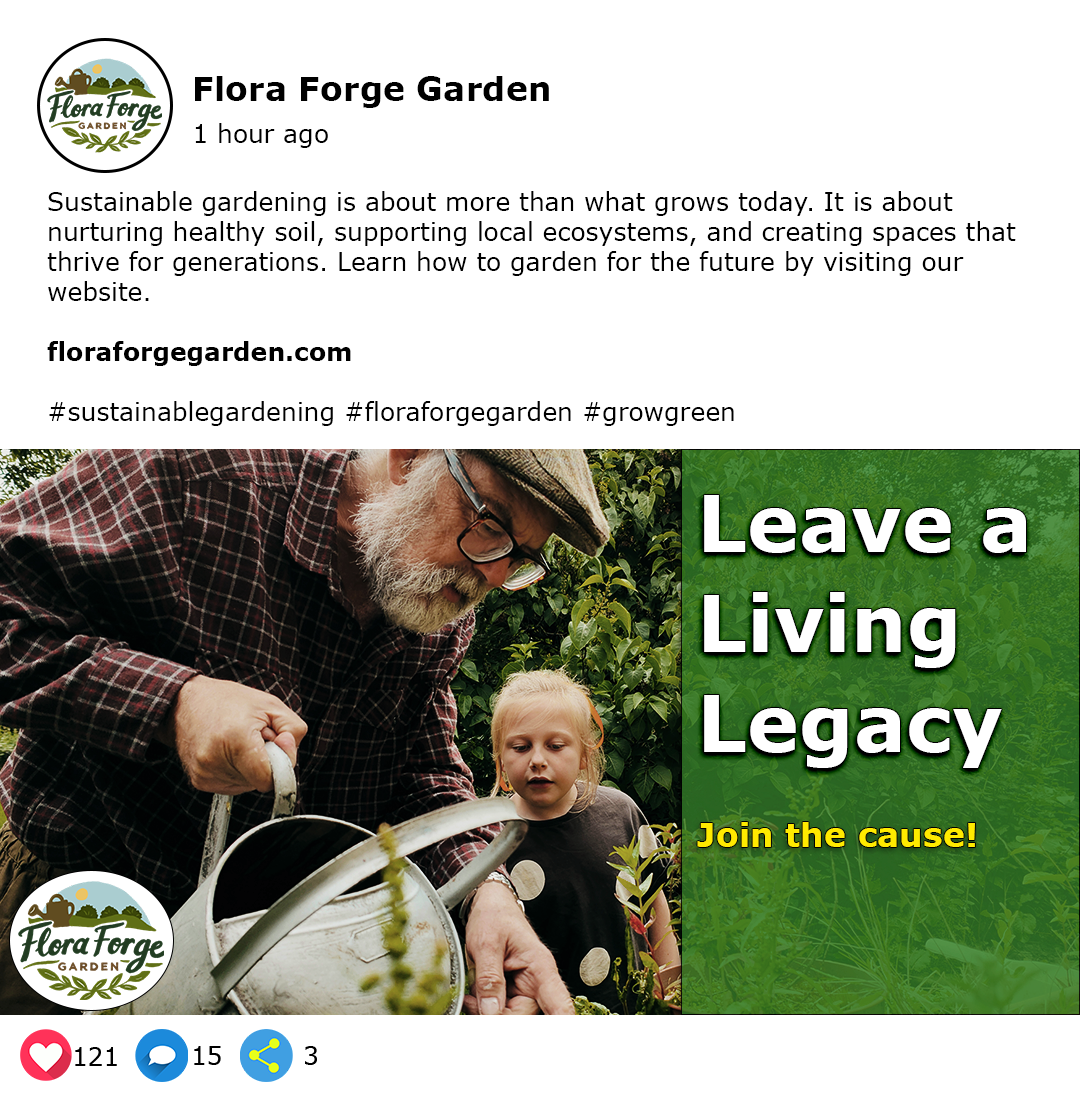
Leave a Living Legacy Social Media Post
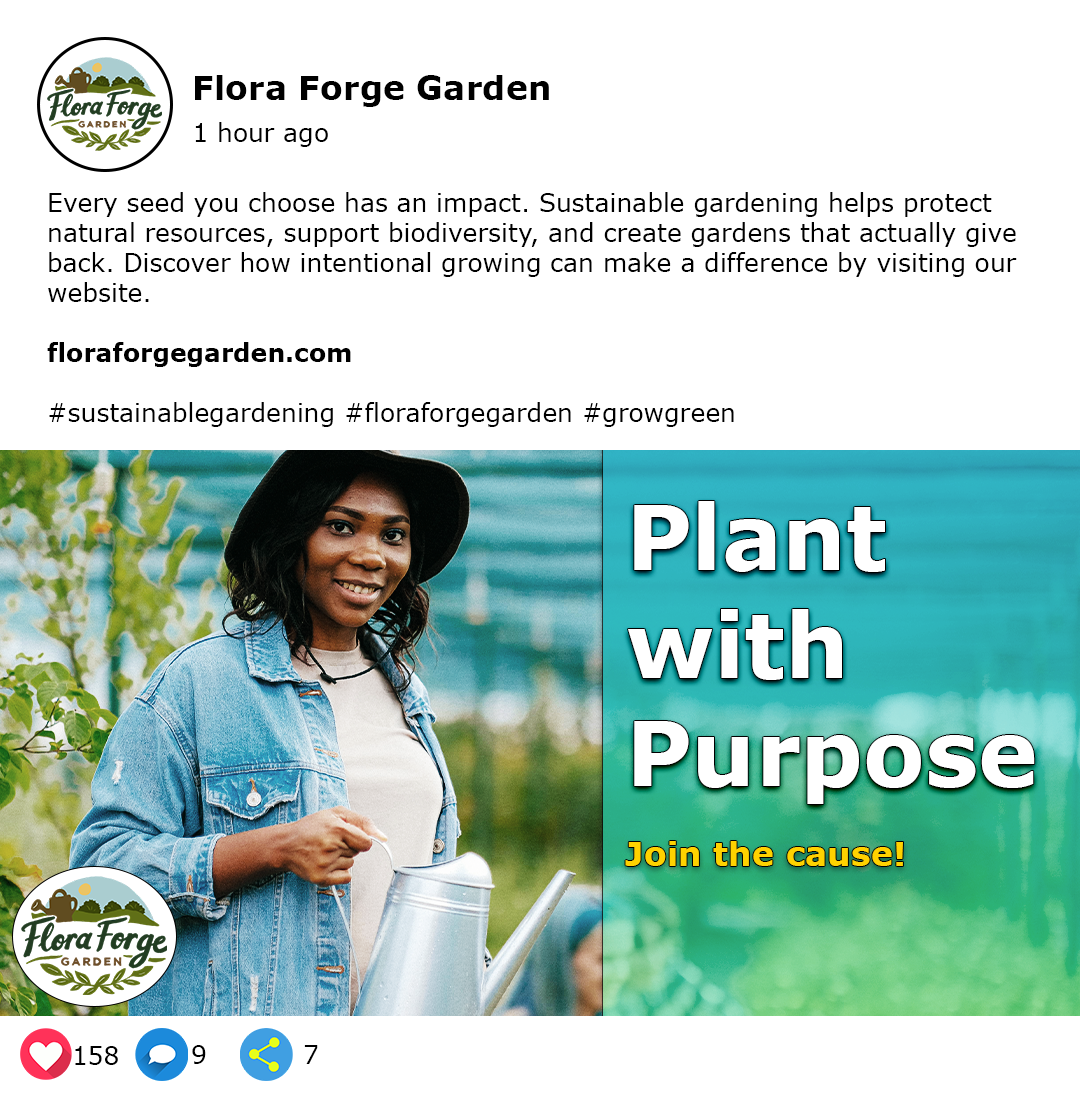
Plant with Purpose Social Media Post
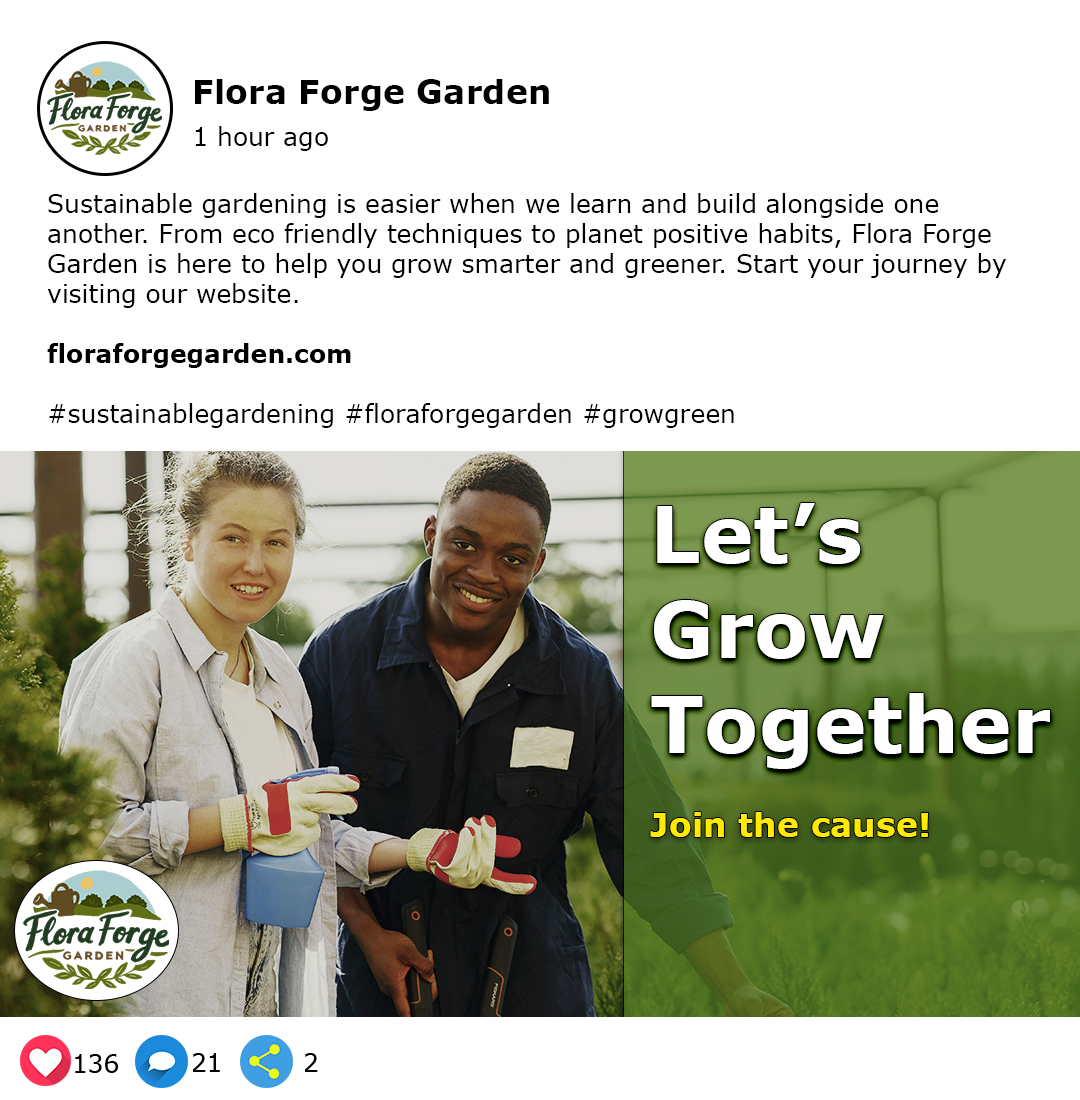
Let's Grow Together Social Media Post
Design Process
Before starting the design, I focused on understanding the needs of the target audience, especially senior users and individuals with vision impairments. I researched typography and color to improve readability and accessibility, selecting Verdana for its clarity on digital screens and a high contrast color palette to support legibility while maintaining a clean, modern look.
I began the process with wireframes to define the structure and user journey across key screens, including the landing page, home page, capture form, confirmation page, and a nurturing email. This helped establish a clear layout before moving into more detailed design work.
In the mid and high fidelity stages, I refined the visual hierarchy, applied brand elements, and developed a consistent design system. User testing revealed issues with navigation, image sizing, and the event calendar, which I addressed through iteration. I also introduced a footer to improve navigation and access to information, resulting in a more polished, accessible, and user friendly experience.
Prototype Walk-through
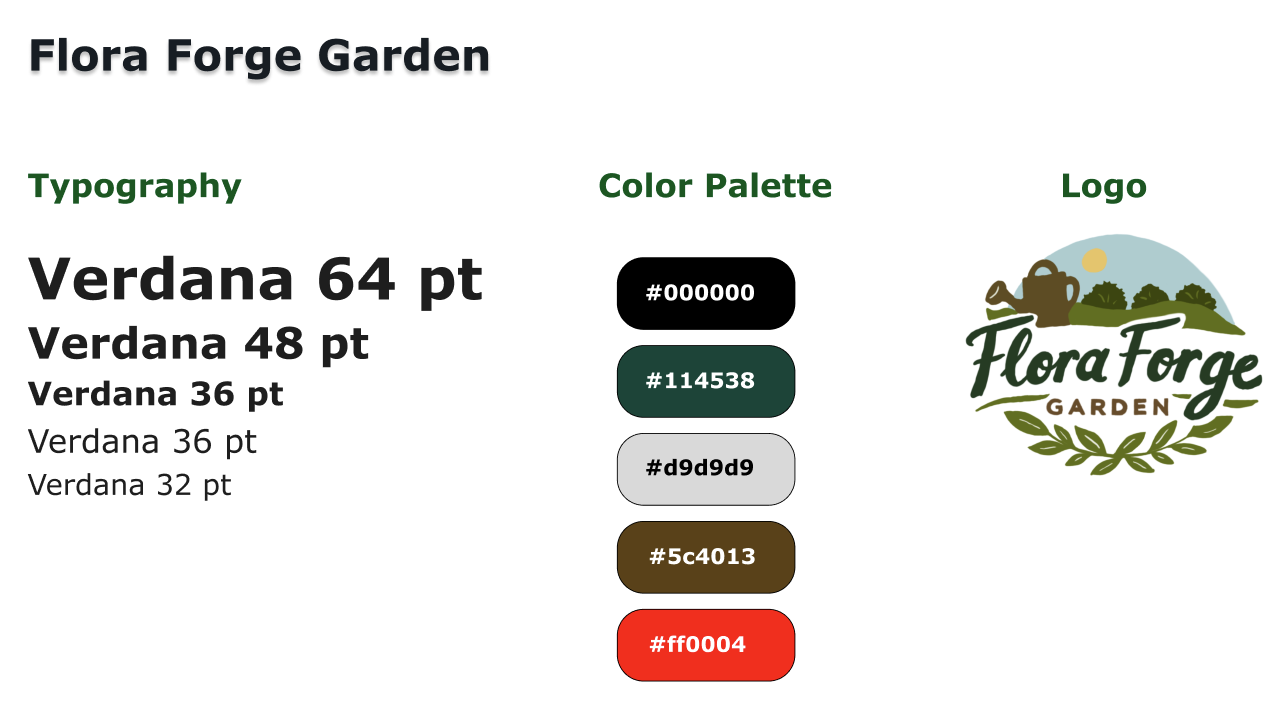
Brand Guide
Testing
To assess how well the design performed, my team conducted two moderated usability testing sessions using a structured script and a mid-fidelity prototype in Figma. Participants were guided through key tasks, including learning about the organization’s mission, signing up for the newsletter, and browsing local gardening events. This approach allowed us to observe user behavior in real time and collect immediate feedback on how easily they could navigate the experience.
The moderated sessions also gave us the chance to ask follow-up questions and gain deeper insight into where users encountered challenges. After reviewing the results, we identified several points of confusion, particularly within navigation and key interactions. These findings guided design updates that improved usability, clarified user flows, and created a more intuitive overall experience.
One of the most notable issues uncovered during testing was that users felt overwhelmed by the broad event calendar. Instead of starting with dates, they preferred to filter by specific event types first. We used this feedback to restructure the experience, making it easier for users to find events that matched their interests.
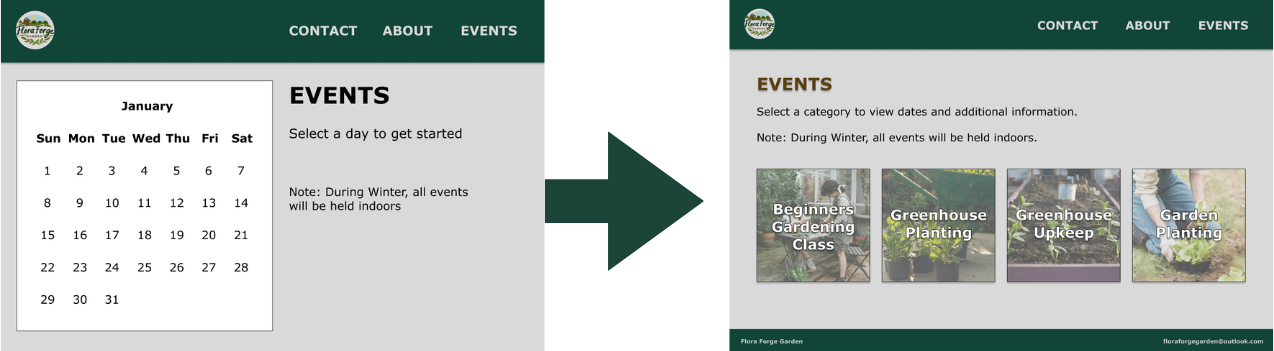
Event selection changes
Credits
Reese Bishop | Lead Designer
Tereza Garcia | Lead Researcher
Cristopher Guifarro | Lead Documenter & Tester